
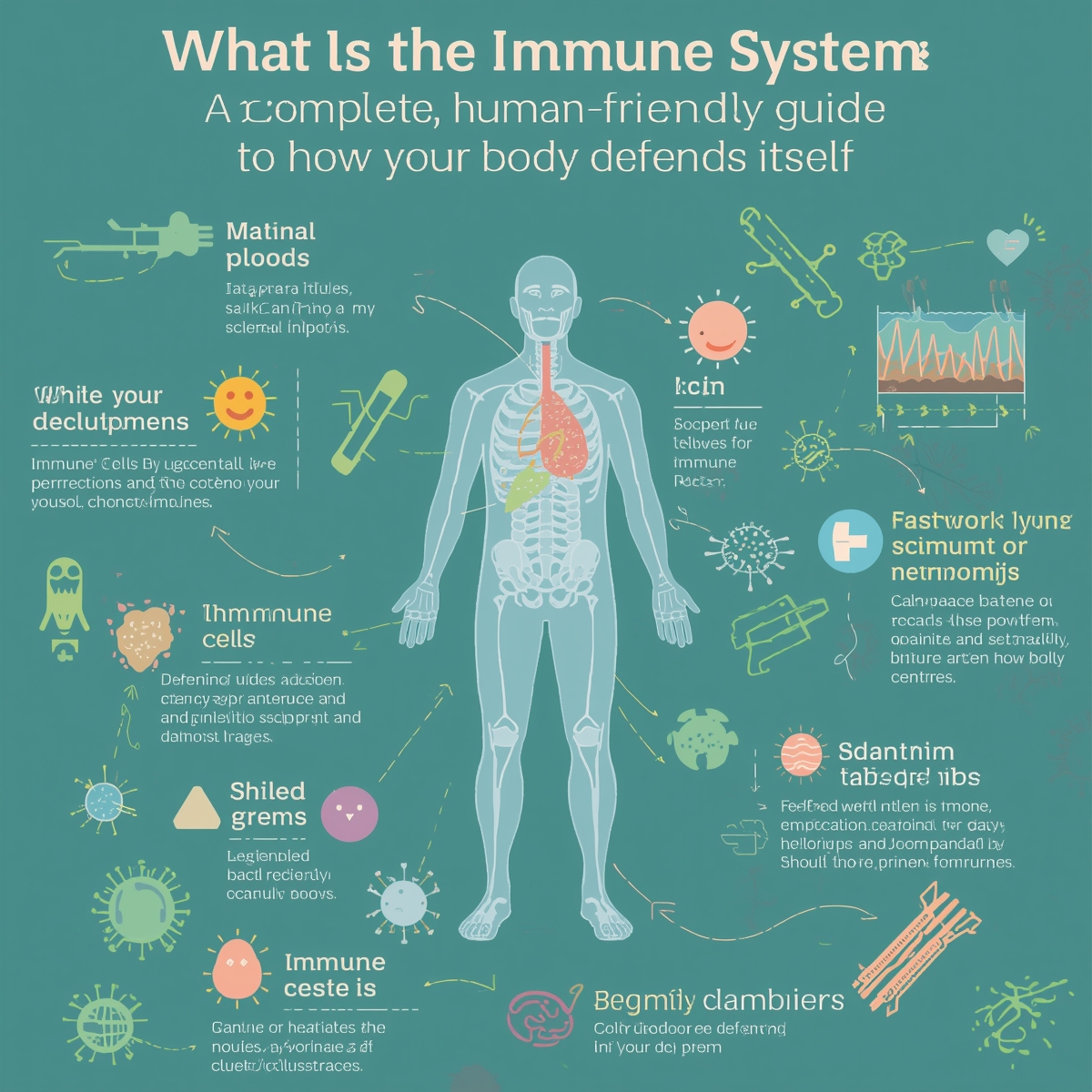

What Is the Immune System? A Complete, Human-Friendly Guide to How Your Body Defends Itself
What is the immune system and why does it matter so much for your health?
Every single day, your body is exposed to bacteria, viruses, fungi, and other harmful invaders. Most of the time, you don’t even notice — because your immune system is quietly doing its job in the background.
This detailed, professionally edited guide explains what is the immune system, how it works, why it sometimes fails, and how you can support it in daily life. The language is simple, the flow is natural, and important terms are bolded and hyperlinked so you can explore deeper whenever you want.
What Is the Immune System and Why Is It Essential?
The immune system is the body’s natural defense network. Its main job is to identify, attack, and remove harmful substances such as bacteria, viruses, parasites, and toxins — while protecting healthy cells at the same time.
Think of the immune system as:
-
A security system that checks every visitor
-
A firefighter that reacts to emergencies
-
A memory bank that remembers past infections
According to the National Institute of Allergy and Infectious Diseases, the immune system is essential for survival because it stops small infections from becoming serious or life-threatening.
How the Immune System Works: Step by Step
Understanding how the immune system works becomes much easier when broken down into clear stages.
Step 1: Detecting Invaders
When a germ enters the body, immune cells recognize special markers on it called antigens. These markers tell the immune system that something does not belong.
You can learn more about antigens from the National Center for Biotechnology Information.
Step 2: Sending Alarm Signals
Once an invader is detected, immune cells release cytokines, which are chemical messengers. These signals alert other immune cells and tell them where to go.
Cytokines act like emergency text messages sent throughout the body.
More details are available from Nature – Cytokine Biology.
Step 3: Attacking the Threat
Different immune cells now jump into action:
-
Some engulf and digest germs
-
Some kill infected body cells
-
Others produce antibodies to neutralize the invader
Step 4: Building Immune Memory
After the infection clears, the immune system keeps memory cells. If the same germ returns, the response is faster and stronger.
This is the foundation of immunity and vaccination.
Main Parts of the Immune System
The immune system is not a single organ. It is a network spread across the body.
Major Immune System Organs
-
Bone marrow – produces blood and immune cells
-
Thymus – trains T cells
-
Spleen – filters blood and fights infection
-
Lymph nodes – meeting points for immune cells
-
Tonsils and adenoids – guard entry points like the mouth and nose
A clear overview can be found at the Cleveland Clinic – Immune System Guide.
Types of White Blood Cells in the Immune System
White blood cells, also called leukocytes, are the main workers of the immune system.
Phagocytes: The First Responders
Phagocytes surround, swallow, and destroy germs.
Key types include:
-
Neutrophils – fast responders during infection
-
Macrophages – long-lasting cleanup cells
-
Dendritic cells – messengers that activate other immune cells
More information is available from the British Society for Immunology.
Lymphocytes and Adaptive Immune Defense
Lymphocytes provide targeted and long-term protection.
B Cells and Antibody Production
B cells produce antibodies, special proteins that lock onto germs like a key fitting into a lock.
Important antibody types include:
-
IgG – long-term protection
-
IgA – protects mucous membranes
-
IgM – early infection defense
-
IgE – involved in allergies
A trusted explanation is available from Johns Hopkins Medicine.
T Cells and Immune Control
T cells develop in the thymus and play critical roles in immune balance.
-
Helper T cells (CD4) coordinate immune responses
-
Killer T cells (CD8) destroy virus-infected cells
-
Regulatory T cells prevent the immune system from overreacting
You can read more at Nature Reviews – T Cells.
Natural Killer Cells and Viral Defense
Natural killer (NK) cells attack infected and abnormal cells without prior training.
They are especially important against:
-
Herpes viruses
-
Epstein–Barr virus
-
Certain cancer cells
More details are explained by Cancer Research UK.
Innate Immunity vs Adaptive Immunity
Innate Immunity
Innate immunity is the protection you are born with. It includes:
-
Skin and mucous membranes
-
Stomach acid
-
Rapid-response immune cells
It acts quickly but is not specific.
Adaptive Immunity
Adaptive immunity develops over time after infections or vaccinations. It remembers specific germs and responds better in the future.
This is why vaccines work.
Learn more from the World Health Organization.
What Is Immunity and How Does It Develop?
Immunity is the body’s ability to resist disease.
There are three main types:
-
Innate immunity – present at birth
-
Adaptive immunity – developed through exposure or vaccines
-
Passive immunity – temporary protection from another person, such as antibodies passed from mother to baby
A simple explanation is available from the CDC.
How Immunizations Support the Immune System
Immunizations train the immune system by exposing it to harmless parts of germs. This allows the body to prepare without getting sick.
Vaccines help prevent diseases such as measles, polio, influenza, and COVID-19.
Trusted information is available at the CDC – Vaccine Basics.
Immune System Disorders
Immunodeficiency Disorders
When the immune system is too weak, infections become frequent or severe.
These include:
-
Primary immunodeficiency (genetic)
-
Secondary immunodeficiency (caused by illness, medications, or aging)
More details can be found at the Immune Deficiency Foundation.
Autoimmune Diseases
In autoimmune diseases, the immune system attacks healthy tissue by mistake.
Examples include:
-
Type 1 diabetes
-
Rheumatoid arthritis
-
Celiac disease
Authoritative information is available from the National Institutes of Health.
Allergies and Immune Overreaction
In allergies, the immune system reacts too strongly to harmless substances like pollen or food. Severe reactions can cause anaphylaxis, which is a medical emergency.
Learn more from the Mayo Clinic.
How to Support a Healthy Immune System: Step-by-Step
You cannot instantly “boost” immunity, but you can support it daily.
-
Eat a balanced diet with fruits, vegetables, and whole foods
-
Sleep well, aiming for 7–9 hours
-
Exercise regularly
-
Manage stress
-
Avoid smoking and excess alcohol
-
Stay up to date with vaccinations
Evidence-based guidance is available from Harvard Health.
Summary: What Is the Immune System?
The immune system is your body’s built-in defense mechanism. It detects threats, fights infections, remembers past invaders, and keeps your body in balance.
Understanding what is the immune system helps you make smarter health choices and appreciate the complex protection working inside you every moment of your life.
In simple words:
The immune system doesn’t just fight disease — it protects life itself.








One Response
You really make it seem really easy with your presentation however I find
this matter to be actually one thing which I believe I might never understand.
It seems too complex and extremely wide for me.
I am looking ahead for your next publish, I will try to
get the dangle of it!