
Sustainable Agriculture: Practices, Benefits, and Strategies for a Greener Future
Sustainable agriculture is more than just a farming method—it’s a philosophy. At its core, it aims to produce food and fiber while protecting natural resources, supporting local communities, and ensuring that future generations can meet their own needs. In a world facing climate change, soil depletion, and water scarcity, sustainable agriculture offers a roadmap to balance human needs with environmental stewardship.
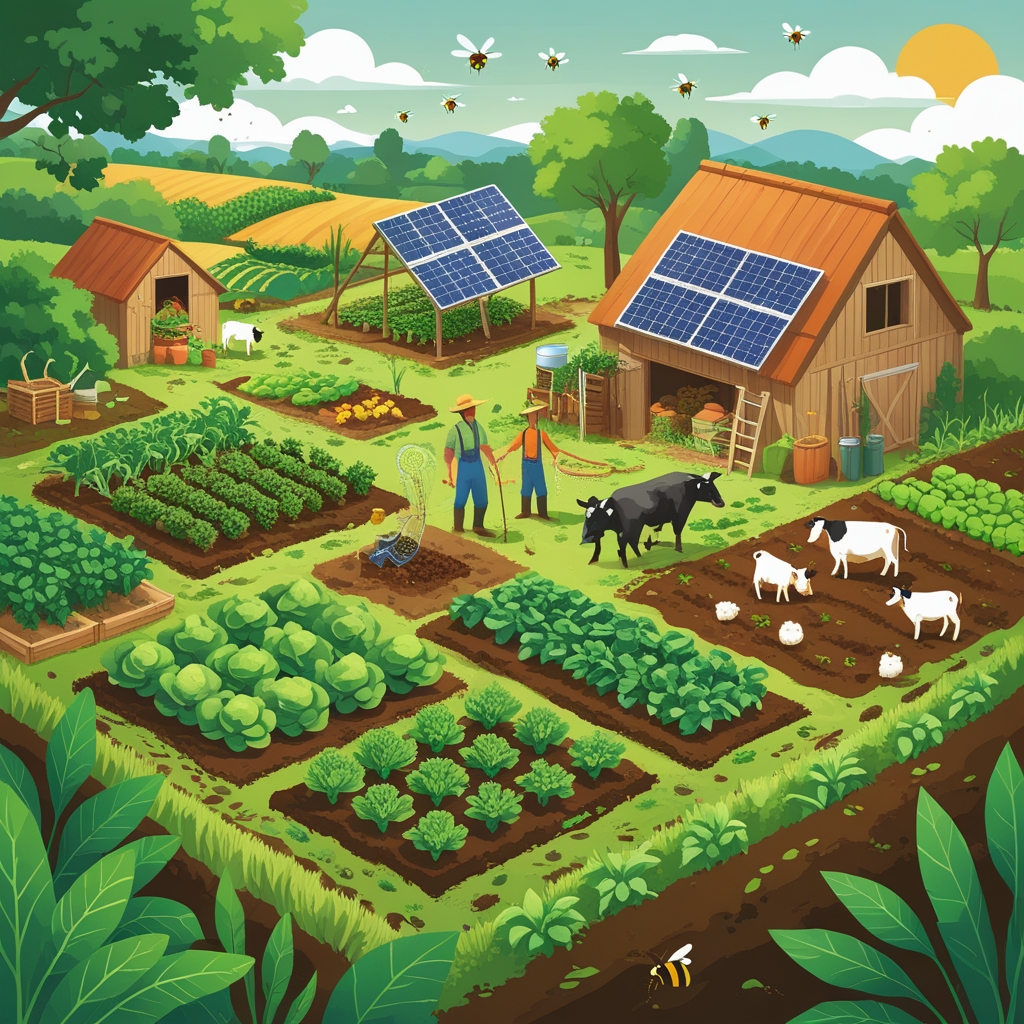
Imagine walking through a farm where fruit trees line the edges of fields, bees buzz around flowering plants, and farmers rotate crops to keep the soil fertile. This is not just a picturesque scene—it is a working model of sustainable farming practices in action.
Sustainable Farming Practices: A Modern Approach to Growing Food
Implementing sustainable farming practices involves rethinking traditional farming methods. Instead of relying heavily on synthetic fertilizers and pesticides, farmers adopt techniques that improve soil health, enhance biodiversity, and conserve water. Wikipedia
Some key practices include:
-
Crop rotation: Alternating crops prevents soil depletion, reduces pest pressure, and improves yields naturally.
-
Agroforestry: Integrating trees with crops provides shade, reduces erosion, and increases farm biodiversity.
-
Organic farming methods: Reducing chemical inputs protects both human health and the environment.
-
Integrated pest management (IPM): Using natural predators and monitoring pests reduces the need for chemical interventions.
For example, a small farm in California rotated tomatoes, legumes, and cover crops over three years. Not only did the soil fertility improve, but pest problems decreased by 40%, showing how sustainable practices can deliver measurable results.
Benefits of Sustainable Agriculture: Environmental, Economic, and Social Gains
The benefits of sustainable agriculture are vast and interconnected:
-
Environmental benefits: Reducing chemical inputs protects water quality, supports pollinators, and promotes biodiversity in farms.
-
Economic gains: Sustainable farms often save money on inputs and tap into growing markets for organic and local produce.
-
Social improvements: Fair wages, safe working conditions, and access to healthy food strengthen communities.
Consider a community in India where farmers switched to agroecology techniques. By planting a mix of vegetables, legumes, and fruit trees, they improved soil health, increased profits, and even provided training for neighboring villages. The ripple effect of sustainable agriculture often extends far beyond the farm.
Environmental Impact of Agriculture and How Sustainability Helps
Traditional intensive farming can harm ecosystems through soil erosion, water pollution, and biodiversity loss. In contrast, sustainable agriculture minimizes the environmental impact of agriculture by:
-
Encouraging soil regeneration through composting and cover crops.
-
Reducing reliance on chemical pesticides and fertilizers.
-
Promoting carbon sequestration in soils and vegetation.
-
Protecting local water resources via water conservation in agriculture.
For instance, farms practicing climate-smart agriculture in Kenya have integrated trees into croplands. These trees store carbon, reduce erosion, and create habitats for beneficial insects—a win-win for farmers and the environment.
Economic Sustainability in Farming: Ensuring Profitable and Viable Agriculture
Economic sustainability in farming ensures that farms remain profitable while maintaining environmental and social standards. Key strategies include:
-
Diversifying crops to reduce financial risk.
-
Selling directly to local markets or through value-based supply chains.
-
Reducing input costs by adopting organic or regenerative practices.
A case study from a midwestern U.S. farm shows that by switching to integrated pest management and cover cropping, the farmer reduced fertilizer costs by 30% and increased profits by selling premium organic produce locally.
Social Equity in Agriculture: Fair Practices and Community Engagement
Social equity in agriculture emphasizes fairness for farmworkers and rural communities. This includes:
-
Fair wages and safe working conditions.
-
Access to healthy, nutritious food for local communities.
-
Education programs to share sustainable practices.
In Cuba, urban agriculture initiatives empower communities by involving residents in growing vegetables and herbs locally. These programs not only improve nutrition but also create social cohesion.
Agroecology Techniques: Integrating Ecology Into Farming Practices
Agroecology techniques focus on harmonizing agriculture with natural ecosystems. They include:
-
Planting multiple species together to enhance biodiversity.
-
Creating habitats for pollinators and beneficial insects.
-
Using natural processes for pest control and soil fertility.
A famous example is the Milpa system in Mexico, where corn, beans, and squash are planted together. This agroecological system naturally balances nutrients and protects against pests, illustrating centuries-old wisdom in modern sustainable farming.
Soil Health Management: The Foundation of Sustainable Agriculture
Healthy soil is the foundation of sustainable agriculture. Practices include:
-
Cover crops to prevent erosion.
-
Composting and organic fertilizers for nutrient cycling.
-
Limiting tillage to protect soil structure.
Farmers in Australia who incorporated soil health management techniques saw a 25% increase in yield while reducing chemical use, proving that sustainable soil practices pay off both economically and environmentally. sustainable agriculture
Water Conservation in Agriculture: Techniques for Sustainable Water Use
Efficient water use is critical for sustainable agriculture. Key techniques include:
-
Drip irrigation to minimize waste.
-
Rainwater harvesting for supplementary irrigation.
-
Strategic crop selection based on water availability.
In arid regions of Spain, farmers using drip irrigation and mulching have reduced water use by 50% while maintaining high yields—a perfect example of climate-smart agriculture in practice.
Organic Farming Methods: Reducing Chemicals for Healthier Food
Organic farming methods prioritize natural inputs and ecosystem balance. Benefits include:
-
Lower chemical residues in food.
-
Healthier soils and ecosystems.
-
Stronger market demand for organic produce.
Farmers in France who switched to organic vineyards reported richer flavors in grapes and increased demand from environmentally-conscious consumers.
Climate-Smart Agriculture: Adapting to a Changing Environment
Climate-smart agriculture focuses on resilience to changing weather patterns. It includes:
-
Carbon sequestration through trees and soil management.
-
Drought-resistant crops.
-
Renewable energy for farm operations.
In Bangladesh, farmers practicing climate-smart agriculture have adapted to flooding by planting floating vegetable gardens, ensuring both food security and income.
Biodiversity in Farms: Promoting Ecosystem Health and Resilience
Promoting biodiversity in farms creates resilient ecosystems that naturally regulate pests and pollination. Techniques include:
-
Planting hedgerows and flower strips.
-
Maintaining wetlands for wildlife.
-
Rotating crops to support soil microorganisms.
Biodiverse farms in Costa Rica have seen fewer pest outbreaks and improved pollinator presence, which boosts yields and ecological stability.
Crop Rotation Strategies: Boosting Yield and Soil Fertility Naturally
Crop rotation strategies are simple yet powerful tools for sustainable agriculture. Rotating crops:
-
Improves soil nutrients naturally.
-
Breaks pest and disease cycles.
-
Increases long-term productivity.
For example, alternating legumes and grains in North America improves nitrogen availability and reduces fertilizer dependence.
Agroforestry Systems: Combining Trees with Crops for Sustainable Growth
Agroforestry systems integrate trees and shrubs with crops or livestock. Benefits include:
-
Soil stabilization and reduced erosion.
-
Microclimate regulation for crops.
-
Diversified income from timber, fruit, or nuts.
In Kenya, smallholder farmers use agroforestry systems to grow coffee under shade trees, increasing productivity and carbon sequestration.
Sustainable Food Systems: Connecting Farm to Fork Responsibly
Sustainable food systems ensure that the benefits of sustainable agriculture reach consumers. Key practices include:
-
Local food markets to reduce transport emissions.
-
Community-supported agriculture (CSA) programs.
-
Minimizing food waste through planning and storage.
In Vermont, CSA programs link farmers directly to households, providing fresh produce while supporting farm livelihoods.
Integrated Pest Management: Environmentally Friendly Crop Protection
Integrated pest management reduces chemical use while protecting crops. Methods include:
-
Monitoring pest populations.
-
Using natural predators or biopesticides.
-
Combining multiple strategies for sustainable pest control.
Farmers in India successfully reduced pesticide use by 60% through IPM, resulting in safer food and healthier farmworkers.
Conclusion
Sustainable agriculture is not just a farming technique—it’s a holistic approach to food production that balances environmental protection, economic viability, and social equity. By adopting sustainable farming practices, managing soil health, conserving water resources, promoting biodiversity, and integrating climate-smart strategies, farmers can ensure long-term food security while protecting our planet.
From small-scale community farms to large agroforestry systems, sustainable agriculture creates resilient, profitable, and ecologically friendly farming systems. The future of food depends on adopting these practices today—for the well-being of people, communities, and generations to come.