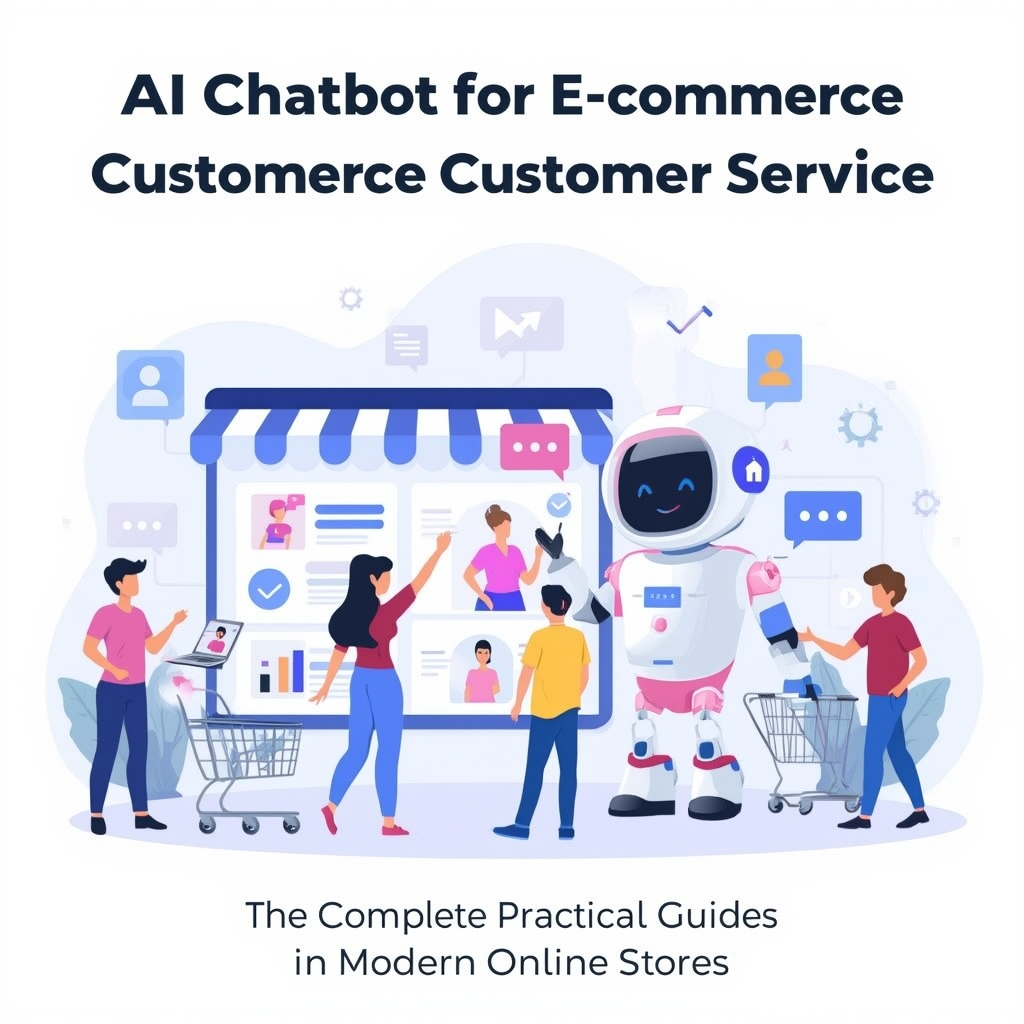

AI Chatbot for E-Commerce Customer Service: The Complete Practical Guide for Modern Online Stores
In today’s fast-moving digital world, customer expectations have changed forever. People want instant replies, 24/7 support, and smooth shopping experiences—and they want all of it without waiting in long queues or sending endless emails. That’s exactly where an AI chatbot for e-commerce customer service comes in.
If you’ve ever abandoned an online cart because no one answered your question on time, you already understand the problem. Now imagine being the store owner losing those sales every day. This is why more online businesses—small startups and global brands alike—are turning to AI-powered chatbots.
This in-depth guide will walk you through everything you need to know about AI chatbot for e-commerce customer service, explained in simple, human language. We’ll cover real-world use cases, step-by-step implementation, best practices, common mistakes, and how these chatbots actually boost sales while keeping customers happy.
AI Chatbot for E-Commerce Customer Service: What It Really Means
An AI chatbot for e-commerce customer service is a smart virtual assistant that talks to your customers through chat—on your website, mobile app, or messaging platforms. Unlike old-school bots that only followed scripts, modern AI chatbots understand language, context, and intent.
These chatbots use artificial intelligence, natural language processing (NLP), and sometimes machine learning to answer questions, track orders, suggest products, and even solve problems—without human help.
You can learn more about conversational AI basics from this resource by IBM:
https://www.ibm.com/topics/conversational-ai
Why E-Commerce Customer Service Needs AI Chatbots Now More Than Ever
Let’s start with a short story.
A friend of mine runs a small online clothing store. During seasonal sales, she used to receive hundreds of messages a day asking the same questions:
“Where is my order?”
“Do you have this in medium?”
“What’s your return policy?”
Her support team was overwhelmed. Customers were frustrated. Sales were slipping.
After adding an AI chatbot for e-commerce customer service, nearly 70% of these questions were answered automatically—within seconds. Her team finally had time to handle complex issues, and customer satisfaction went up.
This isn’t magic. It’s automation done right.
Key Benefits of AI Chatbot for E-Commerce Customer Service
1. 24/7 Customer Support Without Extra Costs
Unlike human agents, an AI chatbot for e-commerce customer service never sleeps. It works nights, weekends, and holidays—answering customer questions instantly.
This is especially helpful for global stores with customers in different time zones.
Learn more about always-on customer service here:
https://www.salesforce.com/resources/articles/customer-service/
2. Faster Responses = Higher Conversions
Speed matters. Studies show that customers are far more likely to buy when they get immediate answers.
An AI chatbot for e-commerce customer service responds in seconds, reducing bounce rates and abandoned carts.
According to HubSpot:
https://blog.hubspot.com/sales/live-chat-statistics
3. Reduced Support Costs
Hiring and training support agents is expensive. AI chatbots handle repetitive questions automatically, cutting support workload by up to 80% in some cases.
This lets your human team focus on high-value conversations.
4. Personalized Shopping Experience
Modern AI chatbots can:
-
Recommend products
-
Remember past interactions
-
Offer discounts based on behavior
That’s personalization at scale.
Learn how personalization impacts e-commerce:
https://www.mckinsey.com/capabilities/growth-marketing-and-sales/our-insights/the-value-of-getting-personalization-right
How AI Chatbot for E-Commerce Customer Service Actually Works
At a basic level, an AI chatbot follows this flow:
-
Customer asks a question
-
Chatbot analyzes intent using NLP
-
Bot pulls data from connected systems (CRM, inventory, orders)
-
Chatbot responds or escalates to a human agent if needed
You can explore how NLP works here:
https://www.techtarget.com/searchenterpriseai/definition/natural-language-processing-NLP
Common Use Cases of AI Chatbot for E-Commerce Customer Service
Order Tracking and Delivery Updates
Customers constantly ask about order status. AI chatbots instantly fetch real-time data and respond accurately.
This reduces “Where is my order?” tickets dramatically.
Returns, Refunds, and Exchange Handling
Instead of emailing support, customers can:
-
Start a return
-
Check refund status
-
Learn return policies
All through chat.
Learn more about automated returns:
https://www.shopify.com/enterprise/returns-management
Product Recommendations and Upselling
An AI chatbot for e-commerce customer service doesn’t just support—it sells.
For example:
“Looking for running shoes? Here are our top-rated picks under $100.”
This boosts average order value (AOV) naturally.
Cart Abandonment Recovery
Chatbots can:
-
Detect abandoned carts
-
Send reminders
-
Offer discounts
Cart recovery strategies explained here:
https://www.bigcommerce.com/articles/ecommerce/cart-abandonment/
Secondary Keywords-Based Sections (SEO-Optimized)
AI-Powered Chatbot for Online Stores: Must-Have Features
When choosing an AI-powered chatbot for online stores, make sure it includes:
-
Natural language understanding
-
Omnichannel support (web, WhatsApp, Messenger)
-
CRM and e-commerce platform integration
-
Human handoff
-
Analytics and reporting
Omnichannel explained:
https://www.oracle.com/cx/what-is-omnichannel/
E-Commerce Customer Support Automation with AI Chatbots
E-commerce customer support automation means letting AI handle repetitive tasks while humans focus on complex problems.
Automation helps with:
-
FAQs
-
Order lookups
-
Policy questions
This improves response time and consistency.
AI Chatbots for Online Shopping Experience Improvement
A well-designed chatbot improves the entire online shopping experience by:
-
Guiding buyers
-
Reducing confusion
-
Making checkout easier
According to PwC, customer experience is a key buying factor:
https://www.pwc.com/us/en/services/consulting/library/consumer-intelligence-series/future-of-customer-experience.html
Step-by-Step Guide: How to Implement an AI Chatbot for E-Commerce Customer Service
Step 1: Identify Customer Pain Points
Review:
-
Support tickets
-
Live chat logs
-
Customer reviews
Find repeated questions.
Step 2: Choose the Right AI Chatbot Platform
Look for platforms with:
-
E-commerce integrations (Shopify, Magento, WooCommerce)
-
AI training tools
-
Scalability
Popular platforms include Intercom, Tidio, and Botpress.
Step 3: Train the Chatbot with Real Data
Use:
-
FAQs
-
Product descriptions
-
Past conversations
The better the data, the smarter the chatbot.
Step 4: Test, Monitor, and Improve
Track:
-
Resolution rate
-
Customer satisfaction (CSAT)
-
Conversion impact
Continuous improvement is key.
Best Practices for AI Chatbot for E-Commerce Customer Service
-
Always allow human takeover
-
Be transparent: tell users it’s a bot
-
Keep answers short and helpful
-
Update chatbot knowledge regularly
-
Ensure data privacy compliance (GDPR, CCPA)
Learn about GDPR compliance:
https://gdpr.eu/
Common Mistakes to Avoid
-
Over-automation without human backup
-
Poor training data
-
Ignoring analytics
-
Making the chatbot too complex
Remember: simplicity wins.
Future of AI Chatbot for E-Commerce Customer Service
The future includes:
-
Voice-enabled shopping
-
Visual search through chat
-
Emotion-aware AI
-
Deeper personalization
Gartner predicts AI-driven customer service will dominate soon:
https://www.gartner.com/en/customer-service-support
Final Thoughts: Is an AI Chatbot Worth It for E-Commerce?
Absolutely.
An AI chatbot for e-commerce customer service is no longer optional—it’s a competitive advantage. It saves money, boosts sales, improves customer satisfaction, and scales effortlessly as your business grows.
Whether you’re running a small online store or a large e-commerce brand, investing in the right chatbot today prepares you for tomorrow’s customers.