
Financial Forecasting Software for Startups: A Practical, Human Guide to Smarter Growth and Better Decisions
Building a startup often feels like driving at night with headlights that only show a few meters ahead. You know where you want to go, but the road is uncertain. This is exactly where financial forecasting software for startups becomes a game-changer. It doesn’t magically predict the future, but it gives founders clarity, confidence, and control—three things every growing startup desperately needs.
In this in-depth guide, we’ll break down everything you need to know about financial forecasting software for startups in plain, everyday language. We’ll walk through why it matters, how it works, how to choose the right tool, and how startups actually use it in the real world. Along the way, you’ll find stories, step-by-step guidance, and practical insights that make complex finance feel simple and human.
What Is Financial Forecasting Software for Startups (and Why It Matters So Much)?
At its core, financial forecasting software for startups helps founders estimate future income, expenses, cash flow, and runway based on real data and assumptions. Instead of guessing or juggling messy spreadsheets, you use a structured tool that updates forecasts automatically as your business changes.
Think of it like Google Maps for your finances. You still decide the destination, but the software shows:
-
Where you are right now
-
How much fuel (cash) you have left
-
What happens if you take a different route
According to Investopedia, financial forecasting is about using historical and current data to estimate future outcomes. For startups, this isn’t just useful—it’s survival-critical.
Why Financial Forecasting Software Is Essential for Startups
Most startups don’t fail because they lack ideas. They fail because they run out of cash or make decisions too late. This is where startup financial forecasting tools shine.
1. Cash Flow Visibility (So You Don’t Run Out of Money)
A founder once shared how their startup had “six months of runway”—until they realized payroll, marketing, and SaaS tools drained cash faster than expected. With cash flow forecasting software for startups, those surprises disappear.
You can forecast:
-
Monthly burn rate
-
Cash runway
-
Future funding gaps
Learn more about cash flow basics from Harvard Business School.
2. Better Fundraising Conversations with Investors
Investors don’t expect perfection. They expect clarity. When you use financial forecasting software for startups, you can clearly explain:
-
How you make money
-
When you’ll break even
-
How new funding will be used
Tools like these help you create investor-ready financial models, which is often the difference between a “maybe” and a “yes.”
3. Smarter Day-to-Day Decisions
Should you hire now or wait? Can you afford a new marketing campaign? What happens if churn increases?
With startup financial planning software, you can test these scenarios safely before making real-world moves.
Key Features of Financial Forecasting Software for Startups
Not all tools are created equal. Below are the most important features to look for in financial forecasting software for startups.
Cash Flow Forecasting Software for Startups
Cash flow is the lifeblood of any startup. This feature helps you project:
-
Incoming revenue
-
Outgoing expenses
-
Monthly and quarterly cash balances
Reliable cash flow forecasting reduces stress and helps you plan proactively instead of reacting late. For a deeper understanding, check CFI’s cash flow guide.
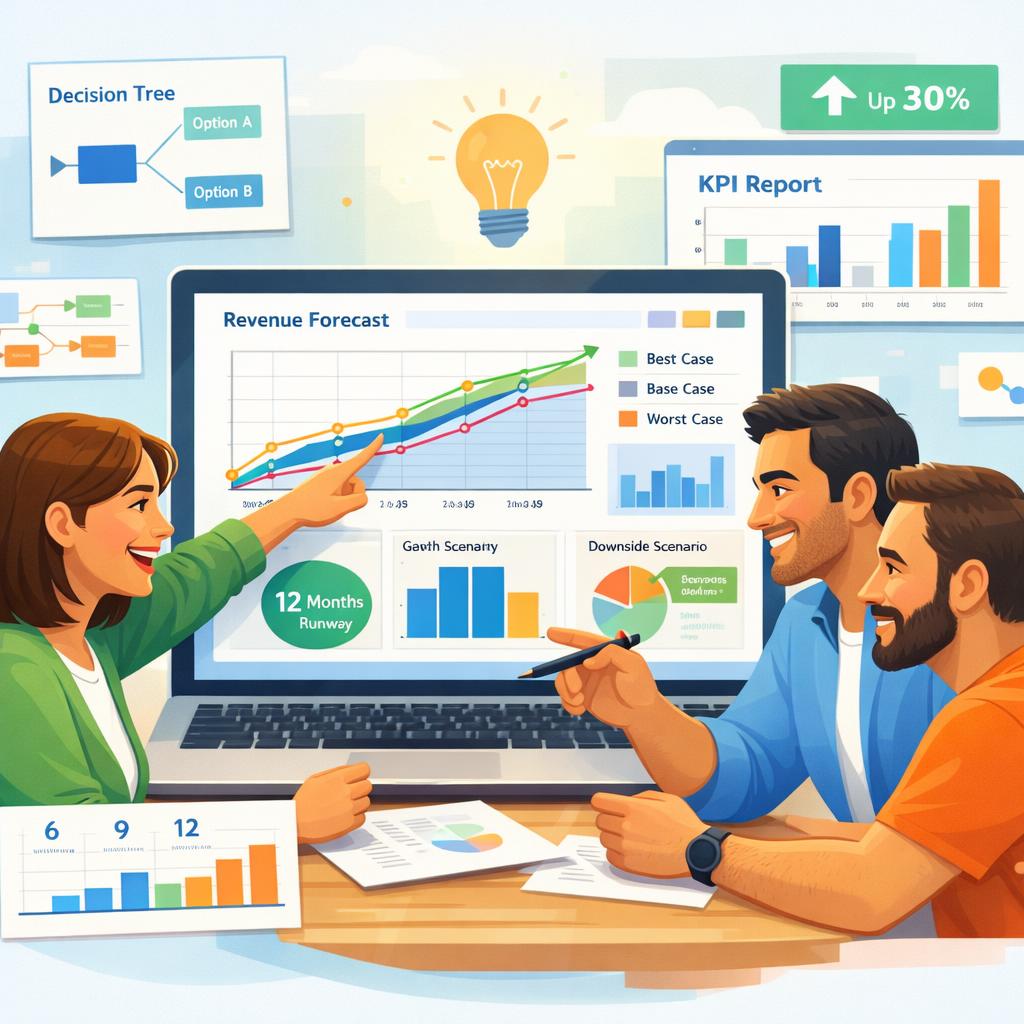
Scenario Planning Software for Startups
“What if” questions are part of startup life. Scenario planning tools for startups allow you to model:
-
Best-case growth
-
Worst-case downturns
-
Realistic base scenarios
For example, what happens if sales are 20% lower than expected? With scenario planning, you don’t panic—you prepare.
Revenue Forecasting Tools for Startups
Accurate revenue forecasting is hard, especially early on. But revenue forecasting software for startups helps by:
-
Using historical trends
-
Applying growth assumptions
-
Breaking revenue down by product, region, or channel
This builds confidence with both founders and investors. Learn more about revenue forecasting from Stripe.
Expense and Budget Forecasting Software for Startups
Small expenses add up fast. Budget forecasting tools help startups:
-
Track fixed and variable costs
-
Compare budget vs actual spending
-
Control burn rate
This level of control is crucial as teams grow and costs increase.
Step-by-Step: How Startups Use Financial Forecasting Software
Here’s a simple, real-world process founders can follow.
Step 1: Start with Your Current Numbers
Connect your accounting software (like QuickBooks or Xero). Most financial forecasting software for startups integrates directly, pulling real data automatically.
Learn more about accounting integrations from QuickBooks.
Step 2: Define Your Key Assumptions
Assumptions might include:
-
Monthly growth rate
-
Average customer lifetime value
-
Hiring plans
Good software makes these assumptions visible and easy to adjust.
Step 3: Build Your Forecast
The tool generates:
-
Income statement projections
-
Cash flow forecasts
-
Balance sheet estimates
This forms the backbone of your financial strategy.
Step 4: Test Scenarios
Run multiple scenarios:
-
Hiring earlier vs later
-
Increased marketing spend
-
Delayed funding rounds
Scenario planning helps you stay flexible in uncertain markets.
Step 5: Monitor and Update Regularly
Forecasting isn’t “set and forget.” The best financial forecasting software for startups updates automatically as new data comes in, helping you stay aligned with reality.
How Financial Forecasting Software Helps with Fundraising
Investors love founders who know their numbers. With financial forecasting software for startups, you can:
-
Share live models
-
Explain assumptions clearly
-
Answer tough questions confidently
According to Y Combinator, strong financial storytelling is a key part of successful fundraising.
Real-Life Story: From Spreadsheet Chaos to Clarity
A SaaS startup with 12 employees managed finances in Excel. Every update broke formulas. Forecasts took days. Decisions were delayed.
After switching to financial forecasting software for startups, updates took minutes. The founder finally understood their runway and raised their next round with confidence.
The lesson? Tools don’t replace thinking—they free you to think better.
Choosing the Right Financial Forecasting Software for Startups
Here’s what to prioritize:
-
Ease of use (no finance PhD required)
-
Scenario planning capabilities
-
Accounting integrations
-
Clear dashboards and reports
-
Scalability as you grow
For a broader comparison, see G2’s financial forecasting software category.
Common Mistakes Startups Make (and How Software Helps Avoid Them)
Overly Optimistic Forecasts
Good software encourages realistic assumptions and shows downside scenarios.
Ignoring Cash Flow
Forecasting tools keep cash front and center.
Not Updating Models
Automated updates reduce outdated decisions.
Financial Forecasting Software vs Spreadsheets for Startups
Spreadsheets are familiar, but they:
-
Break easily
-
Don’t scale well
-
Are hard to collaborate on
Financial forecasting software for startups offers automation, collaboration, and accuracy that spreadsheets simply can’t match. Learn more about spreadsheet limitations from McKinsey.
The Future of Financial Forecasting Software for Startups
AI-driven forecasting, real-time insights, and predictive analytics are becoming standard. These advancements help founders:
-
Spot risks earlier
-
Identify growth opportunities
-
Make faster, smarter decisions
According to Deloitte, modern forecasting is shifting from static planning to continuous, adaptive models.
Final Thoughts: Why Financial Forecasting Software for Startups Is No Longer Optional
Running a startup will always involve uncertainty. But flying blind is optional.
Financial forecasting software for startups gives founders clarity, confidence, and control. It helps you tell a compelling story to investors, manage cash wisely, and make decisions with your eyes open—not crossed fingers.
If you’re serious about building something that lasts, this isn’t just software. It’s a strategic partner in your growth journey.