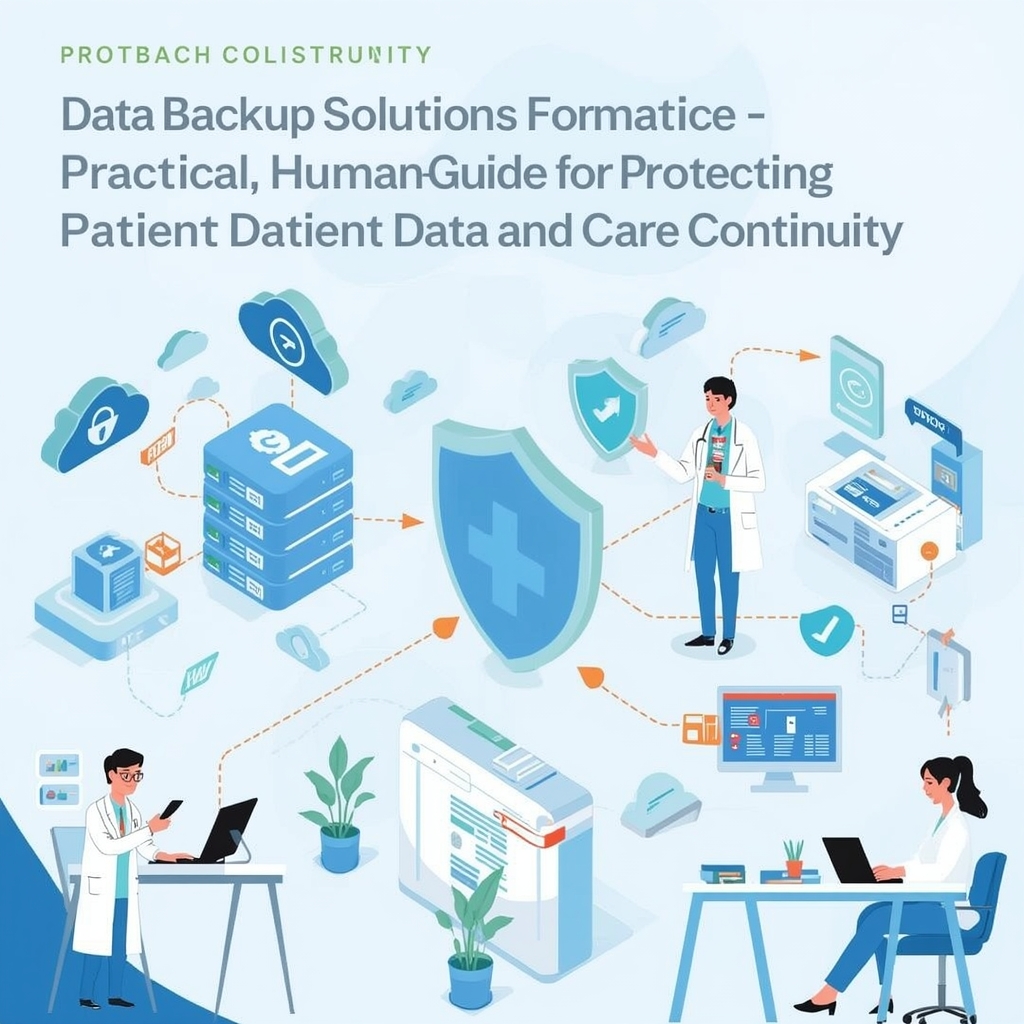

Data Backup Solutions for Healthcare: A Practical, Human Guide to Protecting Patient Data and Care Continuity
Healthcare today runs on data. From electronic health records (EHRs) and lab results to imaging files and billing systems, almost every decision depends on timely and accurate information. That’s why data backup solutions for healthcare are no longer just an IT concern—they are a patient safety issue, a compliance requirement, and a business survival strategy.
Let’s start with a real-life moment.
A few years ago, a mid-sized hospital in the US was hit by ransomware at 3 a.m. on a Sunday. Doctors suddenly couldn’t access patient histories. Nurses reverted to paper notes. Surgeries were delayed. Ambulances were redirected. The reason? Backups existed—but they hadn’t been tested in months. Recovery took days, not hours.
Now imagine the same scenario—but with modern healthcare data backup solutions in place. Systems restore in minutes. Patient care continues. Stress levels drop. That is the difference this article is about.
In this guide, we’ll walk through data backup solutions for healthcare in clear, everyday language. No jargon overload. No scare tactics. Just practical advice, real examples, and step-by-step guidance you can actually use.
Why Data Backup Solutions for Healthcare Matter More Than Ever
Healthcare data is different from other industries. Losing a sales spreadsheet is annoying. Losing patient data can cost lives.
Healthcare organizations manage Protected Health Information (PHI) and Electronic Protected Health Information (ePHI), which are protected by strict laws like HIPAA. But beyond compliance, there’s a deeper issue: patient trust.
When systems go down:
-
Doctors can’t see allergies or medical history
-
Emergency decisions are delayed
-
Billing and insurance claims stall
-
Reputation damage spreads fast
This is why data backup solutions for healthcare are foundational, not optional.
Understanding Healthcare Data: What Exactly Needs Backup?
Before choosing a solution, it helps to understand what healthcare data really includes.
Key Types of Healthcare Data
-
Electronic Health Records (EHRs) – patient histories, diagnoses, medications
-
Medical imaging – X-rays, MRIs, CT scans
-
Operational data – scheduling, staffing, supply chain
-
Financial data – billing, claims, payroll
-
Research data – clinical trials, studies
Each type has different recovery priorities. For example, EHRs often need near-instant recovery, while archived research data can tolerate longer restore times.
Common Threats That Make Data Backup Essential in Healthcare
Cyberattacks and Ransomware
Healthcare is one of the most targeted industries for cybercrime. According to the HIPAA Journal, ransomware attacks continue to rise because attackers know hospitals can’t afford downtime.
Human Error
A tired employee deletes the wrong folder. A system admin misconfigures access. Mistakes happen—even in well-run hospitals.
System Failures and Disasters
Hardware crashes, power outages, floods, fires—these aren’t hypothetical risks. They’re real-world events.
This is why healthcare backup and recovery solutions must assume failure will happen—and plan for it.
Types of Data Backup Solutions for Healthcare (Explained Simply)
Cloud-Based Data Backup Solutions for Healthcare
Cloud backup stores encrypted copies of data in secure, off-site data centers.
Why healthcare organizations like it:
-
Automatic backups
-
Scales easily with data growth
-
Strong encryption and redundancy
Popular providers include platforms aligned with healthcare compliance standards such as AWS HIPAA Eligible Services and Microsoft Azure for Healthcare.
On-Premises (Local) Backup Systems
These use physical servers or storage devices within the hospital or clinic.
Pros:
-
Fast local access
-
Full control
Cons:
-
Vulnerable to disasters
-
Higher maintenance costs
Hybrid Healthcare Data Backup Solutions
Hybrid solutions combine local backups with cloud backups.
This approach is often ideal because:
-
Local backups allow fast recovery
-
Cloud backups protect against disasters and ransomware
Many hospitals consider hybrid models the “best of both worlds.”
Disaster Recovery as a Service (DRaaS) for Healthcare
DRaaS goes beyond backups. It allows entire systems to be restored quickly, sometimes in a secondary cloud environment.
This is critical for:
-
Large hospitals
-
Emergency services
-
Organizations requiring near-zero downtime
Learn more about disaster recovery concepts from NIST.
Step-by-Step Guide: Implementing Data Backup Solutions for Healthcare
Let’s break this down into clear, manageable steps.
Step 1: Identify Your Most Critical Data
Not all data is equal. Rank systems by importance:
-
EHR systems
-
Emergency and diagnostic systems
-
Financial and operational systems
This helps define recovery priorities.
Step 2: Define Recovery Goals (RPO & RTO)
-
Recovery Point Objective (RPO): How much data loss is acceptable?
-
Recovery Time Objective (RTO): How fast must systems be restored?
For EHRs, RTO might be minutes. For HR systems, hours may be acceptable.
Step 3: Choose HIPAA-Compliant Backup Solutions
Ensure vendors explicitly support healthcare compliance:
-
Encryption at rest and in transit
-
Access controls and audit logs
-
Business Associate Agreements (BAAs)
The HHS HIPAA Security Rule is a good reference point.
Step 4: Automate Backups
Manual backups fail. Automation ensures consistency and reliability.
Modern data backup solutions for healthcare run backups:
-
Daily or hourly
-
Without human intervention
-
With alerts if something fails
Step 5: Test Your Recovery Plan Regularly
Here’s a hard truth: untested backups are untrusted backups.
Schedule:
-
Quarterly restore tests
-
Full disaster recovery simulations
-
Staff drills
This turns theory into confidence.
Best Practices for Healthcare Data Backup and Recovery
Follow the 3-2-1 Rule
-
3 copies of data
-
2 different storage types
-
1 off-site copy
This principle is widely recommended in cybersecurity, including by CISA.
Encrypt Everything
Encryption protects data even if backups are stolen or accessed unlawfully.
Limit Access
Not everyone needs access to backup systems. Use role-based access controls.
Monitor Continuously
Modern systems offer dashboards and alerts so you always know backup status.
The Human Side: Training Healthcare Staff
Technology alone isn’t enough.
Train staff to:
-
Recognize phishing attempts
-
Report suspicious activity
-
Understand downtime procedures
A well-trained team can reduce breach risks dramatically.
How Data Backup Solutions Directly Impact Patient Care
Here’s another quick story.
During a regional power outage, a clinic with cloud-based healthcare backup solutions restored systems remotely within an hour. Nearby clinics without backups shut down for two days.
Patients noticed. Trust shifted.
Reliable data backup means:
-
Faster diagnosis
-
Safer treatment decisions
-
Less stress for clinicians
-
Better patient outcomes
Cost of Ignoring Data Backup in Healthcare
According to industry studies, the average healthcare data breach costs millions—not including long-term reputation damage.
Costs include:
-
Regulatory fines
-
Legal settlements
-
Downtime losses
-
Patient churn
In contrast, proactive data backup solutions for healthcare are predictable, budgetable, and far cheaper over time.
Choosing the Right Vendor for Healthcare Data Backup Solutions
When evaluating vendors, ask:
-
Are they healthcare-focused?
-
Do they sign BAAs?
-
Do they support audits and reporting?
-
Is support available 24/7?
Trusted vendors clearly document compliance and recovery capabilities.
Future Trends in Data Backup Solutions for Healthcare
Healthcare backup is evolving fast.
AI-Powered Recovery
AI helps:
-
Detect ransomware early
-
Automate recovery steps
-
Reduce human error
Immutable Backups
These backups cannot be altered or deleted—even by attackers.
Zero-Trust Security Models
Access is verified continuously, not just once.
These trends are shaping the next generation of healthcare data protection strategies.
Final Thoughts: Why Data Backup Solutions for Healthcare Are Non-Negotiable
Healthcare is about people—but data keeps that care moving.
Data backup solutions for healthcare:
-
Protect patients
-
Support clinicians
-
Ensure compliance
-
Preserve trust
They are not just IT insurance. They are a core part of modern healthcare delivery