
Reducing Water Waste in Daily Life USA: Practical Tips for Every Household
Water is one of our most precious resources — yet many households in the USA waste it without even realizing. In fact, the typical American home uses hundreds of gallons of water each day, much of which can be saved with simple changes. By practicing water conservation, you protect the environment, ease pressure on local water systems, and often reduce your water bills.
In this article, we’ll walk through a wide range of easy-to-follow actions you can take at home to significantly cut water waste. Whether you’re aiming to lower your bill, be more eco-friendly, or just do your part — these steps work for everyone.
Why Water Conservation Matters in the USA
-
According to the U.S. Environmental Protection Agency (EPA), fixing household leaks alone can save a typical home nearly 10,000 gallons of water per year. EPA+1
-
The same agency notes that leaks and inefficient fixtures waste huge volumes nationwide — making leak repair and efficient fixtures among the most effective ways to reduce waste. EPA+1
-
Because many U.S. regions face droughts, overuse, or stressed water infrastructure, conserving water is not just good for your pocket — it’s critical for community resilience and environmental protection.
With that in mind, below are 15 practical actions you and your family can adopt right away to contribute to “reducing water waste in daily life USA.”
15 Actions You Can Take to Cut Water Waste at Home
1. Fix Leaks Immediately
Leaks are often silent but wasteful. A single dripping faucet or a running toilet can lose gallons every day.
-
A faucet dripping just once per second can waste more than 3,000 gallons per year. EPA+1
-
Many leaks are easy to detect and fix — worn washers or gaskets, faulty toilet flappers, or loose showerheads are common culprits. EPA+1
-
Regularly inspect faucets, toilets, and pipes — and act quickly when you notice a drip or unusual water flow.
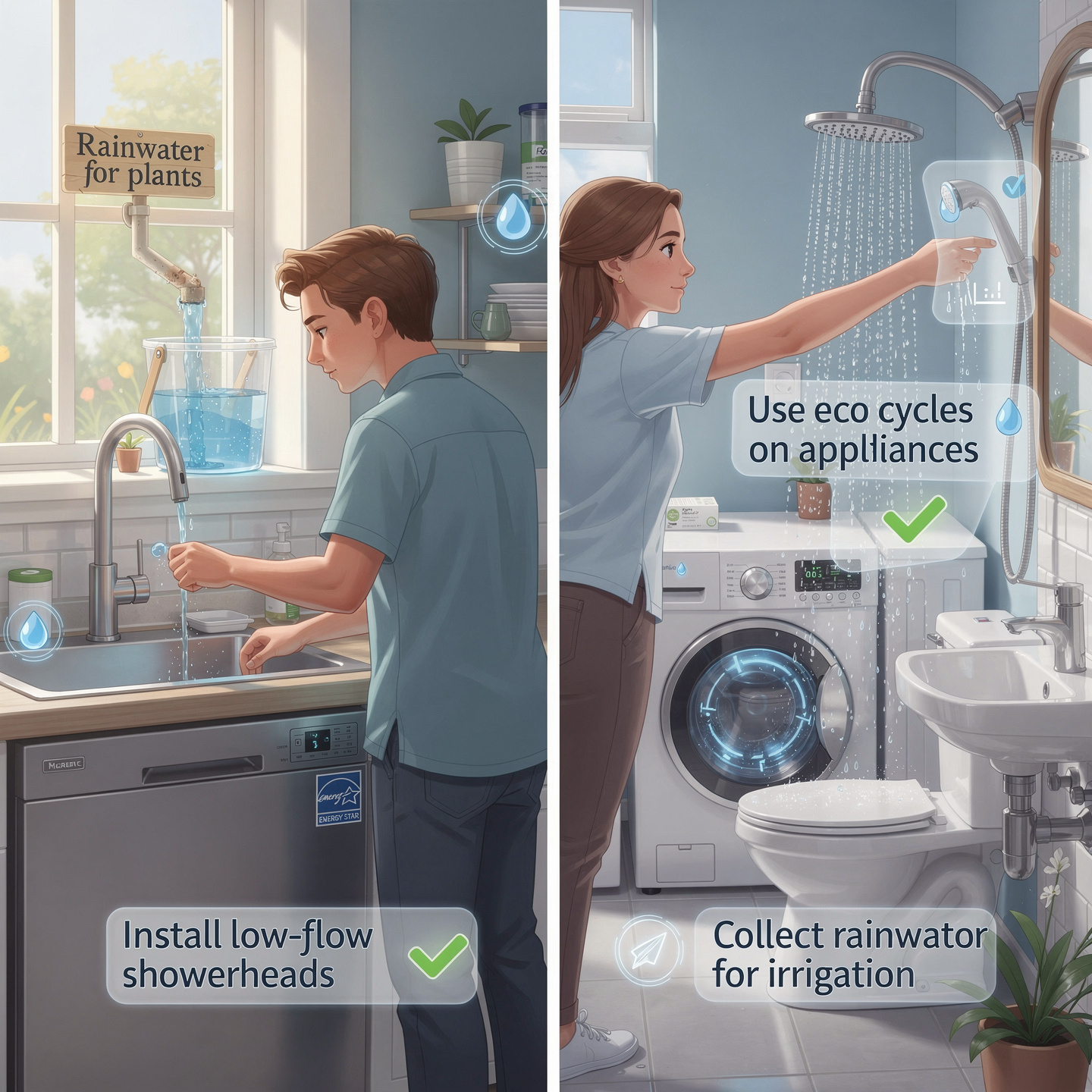
2. Use Low‑Flow Showerheads and Faucet Aerators
Old showerheads and faucets often waste far more water than needed. Installing water-efficient fixtures reduces water use dramatically without sacrificing comfort:
-
Low‑flow showerheads and faucet aerators decrease water flow while maintaining good pressure.
-
This simple swap can save hundreds of gallons per person annually, especially in households that shower daily.
3. Opt for Showers Over Baths
Though baths are relaxing, they usually consume more water than showers:
-
A typical bath can use 35–50 gallons of water — while a 5–10 minute shower often uses far less.
-
Especially if you pair a short shower with a low-flow showerhead, the savings add up.
4. Turn Off the Tap While Brushing or Washing
Small habits matter. Running water while brushing teeth, shaving, or washing hands is needless waste.
-
According to EPA guidance, turning off taps during these activities can save several gallons per day per person, which compounds to hundreds over a year. EPA+1
-
Make it a household habit: wet up, turn off the tap, then turn it back only when you need to rinse.
5. Run Only Full Loads in Dishwashers and Washing Machines
It’s tempting to run a load whenever there are a few dirty dishes or clothes — but that wastes water.
-
Wait until the dishwasher or washing machine is full before running a cycle.
-
For dishes: many modern dishwashers use less water than hand‑washing, especially if you skip pre‑rinsing. EPA+1
-
Use water-efficient cycles when possible.
6. Install Dual‑Flush or Low-Flow Toilets
Toilets are among the biggest water consumers in a home. Upgrading to efficient models can have an immediate impact:
-
Dual‑flush toilets offer a lower-volume flush for liquid waste and a regular flush for solid waste.
-
If full replacement isn’t possible, many older toilets can be fitted with conversion kits to reduce flush volume.
7. Capture and Reuse Water (Rainwater & Greywater)
Not all water you use needs to come from the tap. You can capture rainwater or reuse greywater (from sinks, showers, etc.) for non-potable uses:
-
Set up a rain barrel to collect roof runoff — great for watering gardens or cleaning outdoor spaces.
-
Use cooled cooking water (e.g., from boiled vegetables) to water plants.
-
For a more advanced option: consider a greywater system to direct gently used household water to garden irrigation (where permitted).
8. Water Gardens and Lawns Wisely
Outdoor water use can be a major drain of water resources — especially in dry regions:
-
Water early in the morning or late evening to reduce evaporation.
-
Use drip irrigation or low-flow sprinklers for more efficient watering.
-
Target only areas that need water rather than watering your entire lawn.
9. Sweep Outdoors Instead of Using a Hose
Whether it’s the driveway, patio, or sidewalk — using a broom instead of a hose can save lots of water:
-
A hose running for a few minutes can waste more water than you’d use in an entire day indoors.
-
Sweeping takes no water and gets the job done effectively.
10. Monitor Your Water Usage
Awareness is the first step to change:
-
Review your monthly water bills. Notice patterns or spikes that don’t align with your usage.
-
Check your meter regularly. If all water-using appliances are off and the meter still moves, you might have an undetected leak.
11. Install Smart Water-Saving Devices
Technology can help — from smart leak detectors to efficient irrigation controllers:
-
Leak detectors alert you immediately when water flow or pressure changes unexpectedly.
-
Smart irrigation systems adjust watering schedules based on weather, humidity, and soil moisture — so you don’t overwater.
12. Replace Old, Wasteful Appliances
Old dishwashers, washing machines, and even refrigerators with ice/water dispensers may consume high amounts of water. Upgrading to modern, water-efficient models can significantly reduce daily water usage while saving energy, too.
13. Teach Water-Saving Habits at Home
Conservation works best when everyone participates. Make water saving a family goal:
-
Encourage shorter showers.
-
Create simple rules like “always turn off the tap while brushing.”
-
Share why it’s important — both for bills and the planet.
14. Landscaping That Conserves Water
A water-wise garden or yard reduces the need for frequent watering:
-
Use native or drought‑tolerant plants that need less water.
-
Add mulch to retain soil moisture.
-
Consider permeable paving to let rainwater soak into the ground instead of running off.
15. Regular Maintenance & Water Audits
Preventive care keeps water waste low:
-
Inspect plumbing once every few months (faucets, toilets, hoses, sprinkler systems).
-
Consider a home water audit (many municipalities or utilities offer free audits).
-
Fix issues promptly — small fixes often prevent big waste.
Benefits You Get by Reducing Water Waste
Here’s what you gain by embracing these water-saving practices:
-
Lower utility bills — fewer gallons used = less money spent.
-
Reduced environmental impact — less strain on water supplies, healthier ecosystems.
-
Increased home value — efficient fixtures and systems are a selling point.
-
Resilience — in drought‑prone or water-restricted areas, you’ll be better prepared.
-
Peace of mind — knowing you’re doing your part for a sustainable future.
Even small changes add up. If every household in a community adopted these practices, national water waste could drop dramatically.
A Simple Step‑by‑Step Plan to Get Started
If you feel overwhelmed, here’s a 5‑step plan to begin reducing water waste — one manageable step at a time:
-
Audit your home water use
-
Check for leaks, monitor your water bill, and test toilet tanks overnight for hidden leaks.
-
-
Replace basic fixtures
-
Install low-flow showerheads, faucet aerators, and consider a dual-flush toilet or conversion kit.
-
-
Adopt smart habits
-
Shorter showers, turning off taps when not in use, full loads for dishwasher and laundry.
-
-
Step up to water reuse and efficient landscaping
-
Add a rain barrel or greywater system. Use drip irrigation and drought‑tolerant plants.
-
-
Use technology
-
Add leak detectors, smart irrigation controllers, or water‑efficient appliances over time.
-
This gradual approach spreads out costs, avoids overload, and makes water conservation feel doable and natural.
Real-Life Anecdote: How Small Changes Added Up
Consider the story of a family in Arizona. They started by fixing a single leaky faucet and installing a low-flow showerhead. Encouraged by their lower water bill the next month, they replaced their old toilet with a dual-flush model. A few months later, they added a rain barrel for garden water and started only running full dishwasher loads.
By the end of the year, they cut their household water usage nearly in half — and their water bill dropped by about $200 annually. The surprising part? They didn’t feel like they gave anything up. Their showers felt the same, the garden still flourished, and their lifestyle didn’t change much.
This illustrates how incremental improvements — small, consistent actions — make a big difference.
Final Thoughts: Every Drop Counts — Start Today
Reducing water waste in daily life USA isn’t about extreme changes or big investments. It’s about small, mindful decisions and smart upgrades that pay off in the long run.
Whether you’re repairing leaks, installing efficient fixtures, or simply being more aware of your daily water use — every action helps.
Start with one or two changes today. See the savings tomorrow. Over time, your home becomes more sustainable, your bills shrink, and you contribute to a healthier planet.
Remember: water is life. The less you waste, the more you preserve — for your family, your community, and future generations.