
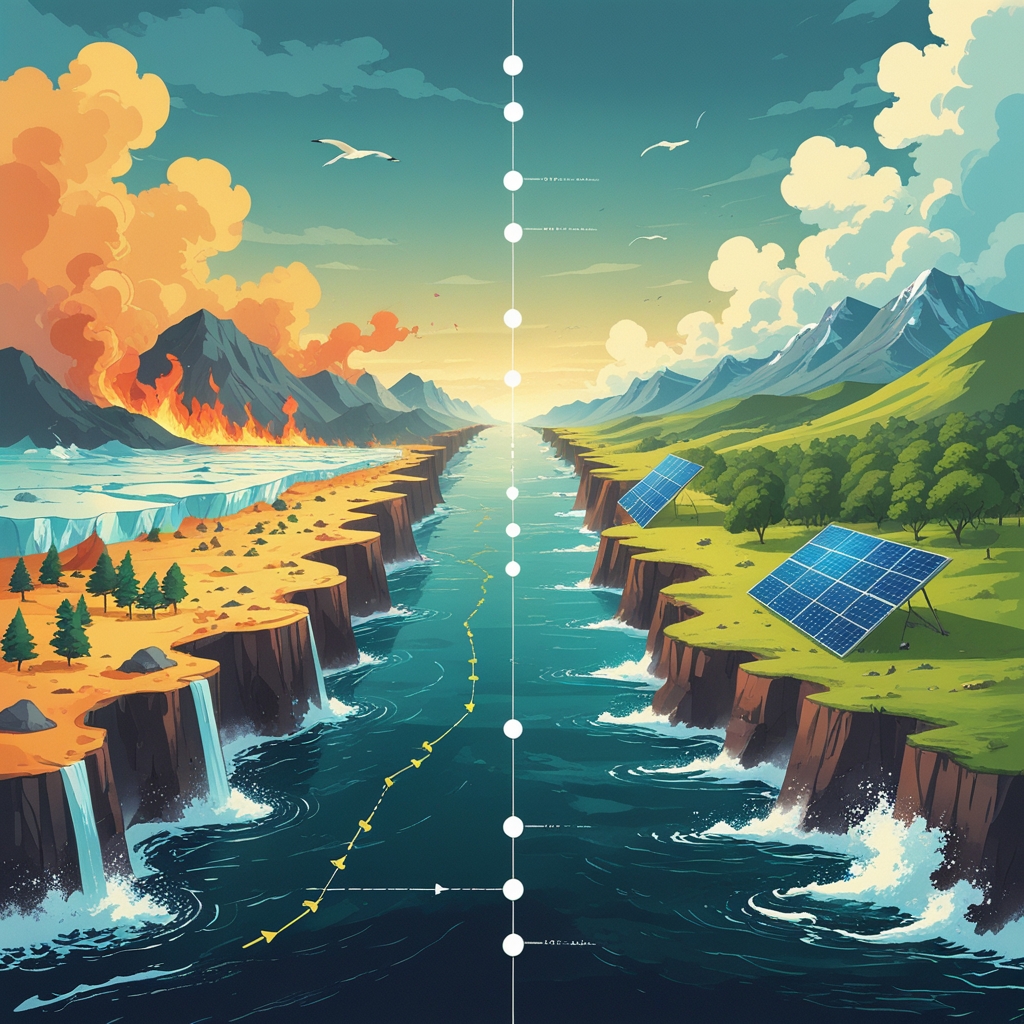

Climate Change Progress: How Humanity is Tackling Our Planet’s Greatest Challenge
Climate Change Progress is no longer just a distant goal—it’s a journey happening in real-time. From the melting Arctic ice to extreme heatwaves, the signs of a warming planet are everywhere. Yet, amid these challenges, humanity has begun to chart a path toward sustainability, resilience, and innovation. This article explores the current state of climate change progress, how communities, governments, and technology are shaping a sustainable future, and practical steps everyone can take to contribute.
Global Climate Change Efforts: What the World is Doing to Act Fast
Across the globe, countries and organizations are stepping up to address the climate crisis. International agreements like the Paris Agreement set ambitious targets to keep warming below 2°C, with a goal of 1.5°C. Over 190 nations have pledged to cut emissions, shift to renewable energy, and protect ecosystems.
Even regional efforts make a difference. The European Green Deal aims to make the EU carbon-neutral by 2050, focusing on energy, transport, and agriculture. Meanwhile, countries like South Korea, Japan, and China have committed to carbon-neutral goals in the coming decades. These global climate change efforts show that the world is slowly turning ambition into action.
Climate Action Strategies: Steps to Reduce Carbon Emissions
Climate action strategies are crucial to achieving measurable climate change progress. Effective strategies combine policy, technology, and community engagement:
-
Carbon Pricing – Tools like carbon taxes and emissions trading systems incentivize companies to lower emissions.
-
Renewable Energy Expansion – Switching from fossil fuels to solar, wind, and hydro reduces greenhouse gas output.
-
Energy Efficiency – Improving building insulation, industrial efficiency, and transportation reduces energy demand.
-
Sustainable Agriculture – Practices like crop rotation, reforestation, and climate-smart farming cut emissions while improving food security.
-
Community Engagement – Local initiatives, such as urban green spaces and cycling infrastructure, help people reduce personal carbon footprints.
Through these strategies, progress is measurable—not just in the lab or on paper but in communities where people are directly experiencing the benefits.
Climate Adaptation Measures: Preparing for a Warming World
Even with mitigation, some climate impacts are unavoidable. That’s why climate adaptation measures are essential. Adaptation helps communities, ecosystems, and economies adjust to rising temperatures, extreme weather, and sea-level rise.
-
Coastal Protection: Planting mangroves and building seawalls buffer storms.
-
Urban Cooling: Green roofs and shaded streets reduce the urban heat island effect.
-
Agricultural Resilience: Drought-resistant crops, soil management, and irrigation efficiency protect food systems.
-
Disaster Preparedness: Early warning systems, evacuation plans, and resilient infrastructure reduce human and economic losses.
Adaptation is not just about surviving—it’s about thriving. By combining mitigation with adaptation, societies can become more resilient to climate shocks.
Renewable Energy Transition: Powering the Future
Transitioning to renewable energy is one of the most visible signs of climate change progress. In recent years:
-
Solar and wind costs have dropped dramatically, making clean energy competitive with fossil fuels.
-
Electric vehicles are replacing gasoline-powered cars.
-
Hydropower, geothermal, and battery storage technologies are expanding globally.
This transition reduces reliance on coal, oil, and gas, cutting carbon emissions while creating new economic opportunities. Anecdotally, communities in rural India now have reliable electricity thanks to solar microgrids, showing how renewable energy can improve lives while advancing climate goals.
Carbon Emission Reduction: Measuring Progress
Tracking carbon emission reduction is essential to gauge real climate change progress. Global CO2 emissions reached historic highs in the early 2000s but have plateaued in some regions due to renewable adoption and energy efficiency. Tools like the Global Carbon Project monitor emissions from fossil fuels, industry, and land-use changes, helping policymakers target interventions effectively.
One remarkable success is the Montreal Protocol, which eliminated ozone-depleting substances and incidentally reduced greenhouse gas emissions. Such examples demonstrate that coordinated policy can deliver measurable climate benefits.
Sustainable Development Goals: Linking Climate to Human Well-being
Sustainable Development Goals (SDGs) are tightly linked to climate change progress. For instance:
-
Goal: Clean water is threatened by droughts and melting glaciers.
-
Goal: Affordable and clean energy supports renewable adoption.
-
Goal: Climate action is central to mitigating global warming.
Achieving these goals requires integrated strategies. Planting trees, reducing emissions, and building resilient infrastructure all serve dual purposes: helping the planet and improving human well-being.
Climate Policy and Governance: Frameworks for Action
Policy shapes climate change progress by providing structure, incentives, and accountability. Examples include:
-
UNFCCC – A global framework to stabilize greenhouse gas concentrations.
-
Kyoto Protocol – Legally binding emission reductions for developed countries.
-
Paris Agreement – Encourages every nation to pledge emission reductions.
While global cooperation is challenging, transparent governance ensures accountability, encouraging both mitigation and adaptation efforts.
Community Climate Initiatives: Local Action for Global Impact
Communities play a critical role in climate change progress. Small, local initiatives can have global significance:
-
Urban tree planting programs reduce heat and improve air quality.
-
Coastal towns restoring wetlands protect against flooding.
-
Schools adopting climate education programs raise awareness among future leaders.
An inspiring anecdote comes from a small town in the Philippines, where villagers rebuilt mangrove forests to shield against typhoons, simultaneously improving fisheries and community resilience.
Climate Technology Innovations: Tools for a Sustainable Future
Technology accelerates climate change progress. Key innovations include:
-
Carbon capture and storage (CCS): Traps CO2 before it reaches the atmosphere.
-
Advanced batteries: Store renewable energy efficiently for homes and cities.
-
AI in climate modeling: Predicts extreme weather and guides mitigation strategies.
These tools are not theoretical—they are already shaping policy, business, and daily life, demonstrating that innovation and climate action go hand-in-hand.
Climate Risk Management: Protecting People and Assets
Climate risk management is about preparing for inevitable impacts. Businesses, governments, and individuals need strategies to reduce vulnerability:
-
Insurance schemes for extreme weather events.
-
Diversification in agriculture to withstand droughts.
-
Early-warning systems for floods and heatwaves.
By understanding and managing risk, societies can prevent disasters from becoming catastrophes.
Climate Justice and Equity: Fairness in Action
Not all communities contribute equally to climate change, nor are they equally affected. Climate justice addresses this imbalance by ensuring that:
-
Wealthy nations finance adaptation in developing countries.
-
Vulnerable populations have access to resilient infrastructure and clean energy.
-
Jobs in a green economy are created for communities transitioning from fossil fuels.
Organizations like Oxfam highlight that the richest 10% produce half of global emissions, emphasizing the need for equity-focused climate solutions.
Green Economy Progress: Finance and Investment
Building a green economy is essential for sustained climate action. This includes:
-
Investing in renewable energy projects.
-
Financing sustainable infrastructure like low-carbon transport.
-
Redirecting subsidies from fossil fuels to clean technologies.
Financial tools, such as green bonds, are helping shift trillions of dollars into sustainable projects, demonstrating that economic growth and climate progress can coexist.
Extreme Weather Preparedness: Adapting to a New Normal
As extreme weather events become more frequent, preparedness is key to climate change progress:
-
Heatwaves: Cooling centers, public health alerts, and urban greening.
-
Floods: Floodplain restoration, dikes, and evacuation planning.
-
Storms: Strengthening infrastructure, early warning systems, and insurance.
Communities worldwide are implementing these measures to reduce loss of life and economic damage.
Carbon Neutral Goals: Ambitions for a Cooler Planet
Many nations have committed to carbon neutral goals to halt warming:
-
EU: 2050
-
South Korea & Japan: 2050
-
China: 2060
Achieving these targets requires coordinated policies, renewable energy deployment, and societal shifts toward sustainability.
Climate Awareness Campaigns: Educating for Action
Awareness is essential. Climate awareness campaigns—from documentaries like An Inconvenient Truth to social media movements like Fridays for Future—have brought climate issues into the public eye. Educating communities empowers individuals to make informed choices and demand government accountability, fueling further climate change progress.
Conclusion: A Roadmap to Climate Change Progress
Climate change progress is not a distant dream—it is happening now, through international policy, local initiatives, technological innovation, and individual action. While challenges remain, humanity has the knowledge, tools, and creativity to slow warming, adapt to changes, and build a sustainable future.
By following these steps—supporting climate policies, adopting renewable energy, practicing sustainable living, and championing climate justice—everyone can be part of the solution. Progress is measured not just in numbers or reports, but in real-world change: healthier ecosystems, resilient communities, and a planet where future generations can thrive.





2 Responses
Can you be more specific about the content of your article? After reading it, I still have some doubts. Hope you can help me.
Your point of view caught my eye and was very interesting. Thanks. I have a question for you.